How mobile check-in works for hotels in 2026 — ID verification, payment auth, key delivery, accessibility fallbacks, and the deployment choices that hold up.
Mobile check-in and express checkout let guests handle arrival and departure from their phone. Manual reception steps get replaced by automated workflows wired into the PMS, payment gateway, and guest-communication platform. Queues shrink, staff workload drops, and the data flowing into the PMS is cleaner. Guests rarely notice the operational shift behind it.
A pre-arrival message goes out by email, SMS, or WhatsApp inviting the guest to start check-in before they reach the property. They confirm booking details, upload an ID, and authorise payment. The system validates the data, updates the PMS, and assigns a room. Once it clears, the guest gets a digital key or a confirmation message — no need to stop at reception.
Express checkout mirrors the arrival flow. The guest gets a secure link before departure, reviews charges, confirms payment, and indicates when they're leaving. The PMS flips the room to 'vacant', housekeeping is notified, and the receipt lands in their inbox. The stay ends without a desk visit.

Guests get faster, contactless arrival and departure with private communication on their own device. Hotels see fewer manual errors and cleaner data. Reception staff stop being a bottleneck during the 3pm rush, and service stays consistent across shifts and properties.
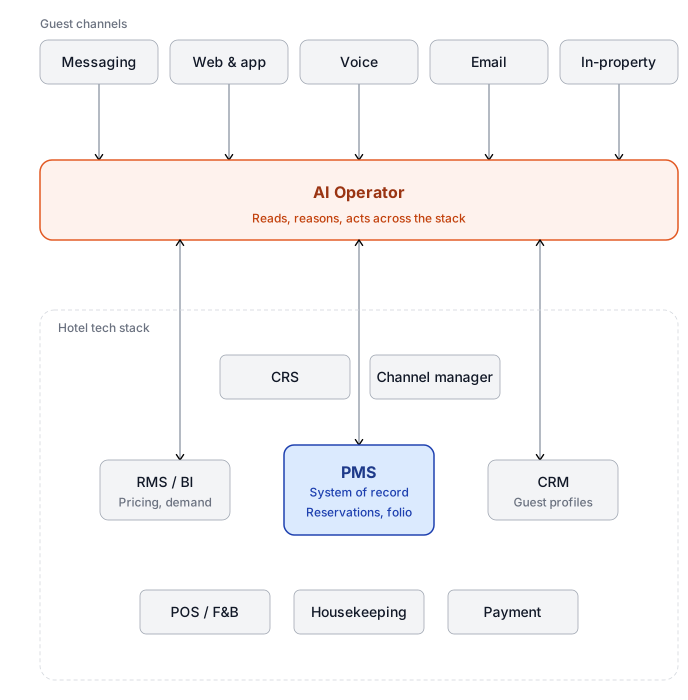
Automation links each step so staff stop processing every reservation by hand. Invitations go out, IDs are verified, payments process, and the PMS updates in real time. Key insight: automation works best in the channels guests already use. WhatsApp or SMS adoption is natural; standalone apps rarely cross 20% usage without brand-level enforcement. Properties that bet on a dedicated app first usually regret the spend within six months.
When all four are properly connected, the guest moves through booking, arrival, stay, and departure on a single digital thread. Human intervention only kicks in for exceptions.
Without automation, guests queue at peak hours for manual ID verification and key hand-off, then come back to the desk at checkout to settle the bill. With automation in place, a message lands in the guest's inbox before arrival, they verify and pay online, and the digital key is on their phone within minutes. Departure is a single confirmation tap; the PMS updates and housekeeping gets pinged automatically.
Viqal handles pre-arrival, in-stay, and departure communication through WhatsApp and other messaging channels. The AI concierge takes care of verification, payments, and PMS updates, and only escalates to staff when something genuinely needs a human. Guests see real-time replies while the operational work happens quietly in the background.
Mobile check-in and express checkout cut two of the most time-consuming stages of the guest journey down to a few taps. Automating ID verification, payment, and PMS updates removes the queue and frees staff from repetitive desk work. Run through messaging and an AI concierge like Viqal, the arrival-to-departure flow becomes contactless and consistent — a better guest experience and less load on operations.
.avif)
Mobile check-in lets guests complete the check-in process on their phone before they arrive. That cuts wait times at the front desk, makes arrival more convenient, and frees staff to focus on tasks that actually need a human.
Virtual concierge services give guests easy access to information and services — restaurant reservations, local attractions, in-room requests — through the channels they already use. Guests get timely, personalised help without chasing the front desk, which lifts satisfaction and repeat-stay rates.
Not particularly. These services are built to plug into the systems most hotels already run. With sensible setup and a short staff training pass, the rollout is straightforward and the operational and guest-experience gains show up quickly.
Properties typically see 30–50% of arrivals shift to mobile check-in within 6 months, reducing front desk peak-hour load by 25–40%. The freed staff time gets reallocated to in-person interactions, request handling, and upselling. Average check-in time across both digital and in-person usually drops by 60%.
ID document scanning plus selfie matching is standard in 2026, often via integrations with Onfido, Veriff, or local KYC vendors. Compliance with EU PSD2 and country-specific police-reporting requirements (Italy, Spain, France) is built into the verification flow. A manual front-desk fallback handles edge cases.
Yes. Many properties run mobile check-in with traditional key collection at front desk or self-service kiosks. Mobile keys add the contactless arrival experience but require extra hardware investment (NFC-enabled locks). Mobile check-in on its own still delivers 70–80% of the operational benefit.
.avif)