An OTA booking is a hotel reservation made through an Online Travel Agency (OTA) such as Booking.com, Expedia, or Agoda. OTAs allow users to compare prices, availability, and reviews across multiple hotels, and complete reservations via their website or app.
An OTA booking is a hotel reservation made through an Online Travel Agency (OTA) such as Booking.com, Expedia, or Agoda. OTAs allow users to compare prices, availability, and reviews across multiple hotels, and complete reservations via their website or app.
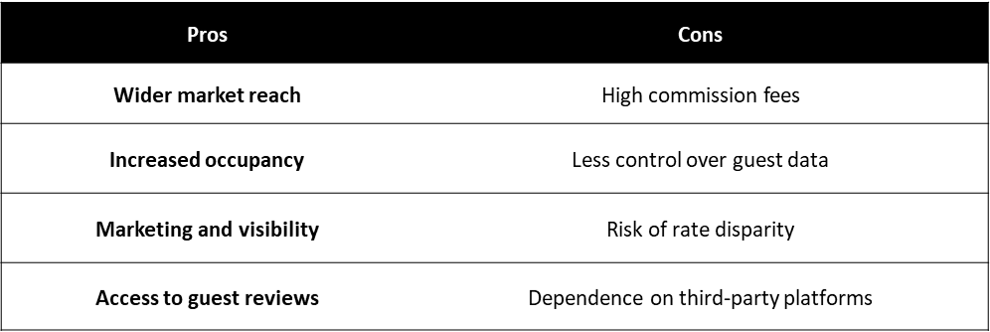
For hotels, OTAs are a very important distribution channel, increasing their visibility and helping maximise occupancy, especially among international travellers. Each booking made through an OTA incurs a commission fee for the hotel, typically ranging between 10% and 25% of the total booking value.
When a reservation is made through an OTA, the hotel’s Property Management System (PMS) or Channel Manager automatically receives the information, ensuring that room availability is updated and preventing overbookings.
Hotels often use OTAs to fill unsold rooms but balance them with direct bookings to reduce commission costs. Information about guests—such as origin, length of stay, and booking source—can also support marketing and pricing strategies.
Bookings made through OTAs increase hotel visibility but result in lower profit margins due to commission costs. The most efficient hotels use channel managers and integrated pricing tools to manage availability and rates across multiple OTAs.
.avif)
Guests reserve rooms via the OTA, which sends the booking details to the hotel’s PMS or Channel Manager automatically.
They help hotels reach a global audience and maintain occupancy, especially during low-demand periods.
OTAs integrate mainly with the PMS and Channel Manager to synchronise rates, availability, and reservations.
High commission fees reduce profit margins, and hotels have limited access to guest data for direct marketing.
In some cases, yes. Larger hotel groups or high-volume properties can negotiate lower commissions based on performance.
By using a Channel Manager and offering exclusive perks for guests who book directly, such as discounts or added amenities.
.avif)
