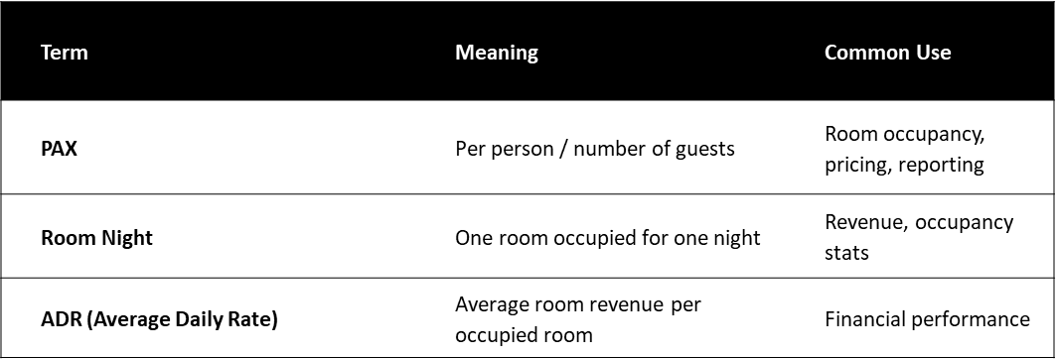
In the hotel industry, “PAX” is short for “per person” or “number of guests.” It is used to show how many people are included in a booking, rate, or service. For example, if it says “Rate: €150 PAX,” it indicates a rate of €150 per person. In hotel systems, PAX is used to work out how many rooms are booked, what the prices are, and how to arrange resources between departments.
In the hotel industry, “PAX” is short for “per person” or “number of guests.” It is used to show how many people are included in a booking, rate, or service. For example, if it says “Rate: €150 PAX,” it indicates a rate of €150 per person. In hotel systems, PAX is used to work out how many rooms are booked, what the prices are, and how to arrange resources between departments.
PAX data is very important for making sure rooms are allocated to the right people, for scheduling housekeeping staff, and for forecasting food and beverage requirements. PAX affects the limits on how many people can stay in a room, how much a room costs, and how much breakfast will cost. When implementing upselling strategies for room upgrades or restaurant packages, it helps to know how many people are booking each one.
Clear PAX information also facilitates coordination between front desk, housekeeping, and restaurant staff to communicate better, which reduces overbookings and service errors.
If you keep accurate records of how many people are in the building (this is called PAX recording), you will be able to demonstrate compliance with fire safety regulations and legal reporting requirements.
.avif)
PAX indicates the number of guests staying in a room or using a service. It helps calculate rates and prepare amenities.
It ensures accurate staffing, meal planning, and occupancy control across departments.
PMS, POS, and revenue management systems all use PAX data for pricing, forecasting, and reporting.
Yes. By analysing PAX trends, hotels can predict occupancy levels, optimise pricing, and plan promotions more effectively.
No. PAX can also refer to people attending events, conferences, or dining in the hotel’s restaurants.
It is usually entered during the booking process or check-in and automatically synced across the hotel’s PMS and other systems.
.avif)
