The occupancy rate is the percentage of available rooms in a hotel that are sold over a specific period. It is calculated using the formula:
Occupancy Rate = (Occupied Rooms / Total Available Rooms) × 100
The number of rooms booked is a key way for hotel managers to evaluate performance. It shows how much demand there is, the effectiveness of pricing strategies, and how well the business is being run.
When occupancy is high, it suggests strong market demand or successful marketing efforts. On the other hand, low occupancy may indicate pricing issues or ineffective marketing strategies.
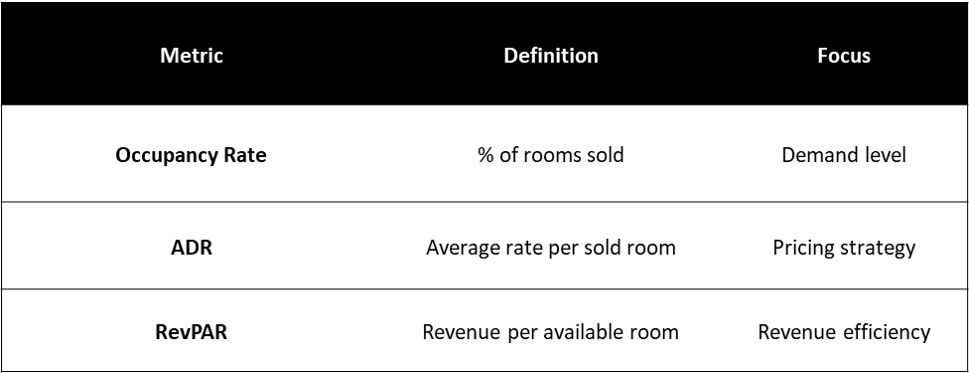
Revenue managers check this number daily and compare it with Average Daily Rate (ADR) and Revenue per Available Room (RevPAR) to see how well the hotel is performing. The front desk and housekeeping teams rely on these forecasts to plan staffing levels and supply needs.
A high occupancy rate does not always mean high profitability. Balancing occupancy with room rates ensures sustainable revenue and avoids unnecessary operational strain.
.avif)
It shows how many rooms are sold compared to the total available, helping track performance and forecast operations.
It helps plan staffing, housekeeping, and inventory while guiding pricing and marketing strategies.
Property Management Systems (PMS), Revenue Management Systems (RMS), and Channel Managers automatically track and report occupancy data.
It varies by season and location, but many hotels aim for an annual average between 65% and 80%.
Not sustainably. While short periods of full occupancy are good, long-term 100% occupancy may indicate prices are too low.
By optimising pricing, offering promotions during low seasons, improving online visibility, and enhancing guest satisfaction to drive repeat bookings.
.avif)
