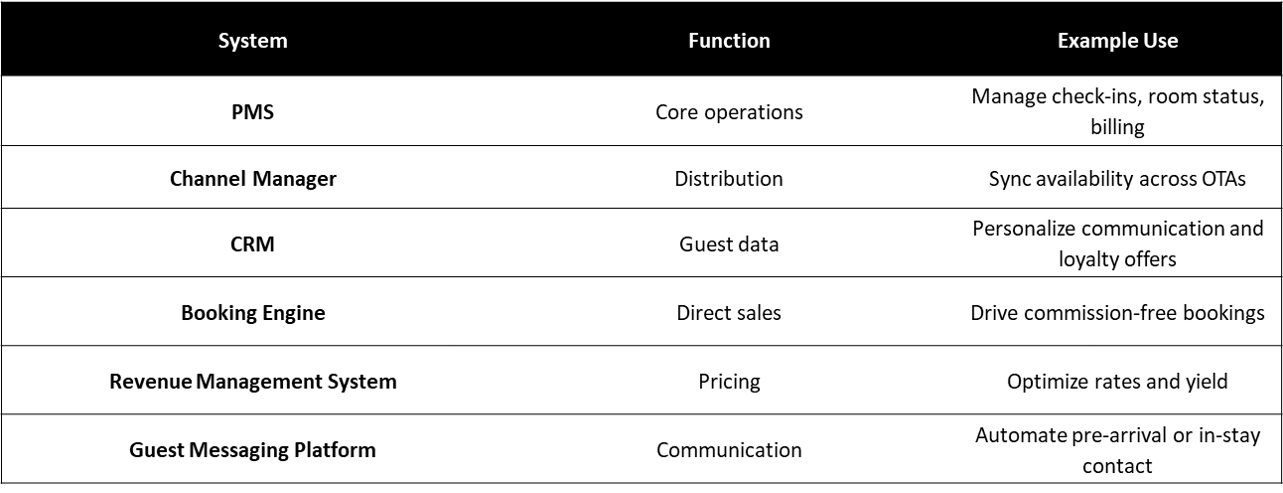
A Hotel Tech Stack is a set of digital tools and software systems that a hotel uses to manage its operations, guest services, marketing, and revenue. It includes important tools like the Property Management System (PMS), Channel Manager, Booking Engine, Customer Relationship Management (CRM), and various integrations for automation and analytics.
A Hotel Tech Stack is a set of digital tools and software systems that a hotel uses to manage its operations, guest services, marketing, and revenue. It includes important tools like the Property Management System (PMS), Channel Manager, Booking Engine, Customer Relationship Management (CRM), and various integrations for automation and analytics.
The hotel’s technology stack is essential to daily operations. If all the different parts of the business (for example, front desk, housekeeping, sales, and management) are well integrated, data can be shared seamlessly across departments.
For example, the CRM can use guest preferences to recommend room upgrades or additional services through the PMS or messaging system. A unified stack reduces manual tasks, eliminates data duplication, and improves decision-making with real-time data.
A tech stack that works well puts integration first. If tools are not integrated, it causes operational inefficiencies and creates friction in the guest experience. Today, many hotels use open APIs and cloud-based systems to ensure compatibility and flexibility across platforms.
.avif)
It connects multiple systems so operational data, guest profiles, and reservations synchronise automatically across departments.
It streamlines workflows, enhances guest experience, and supports data-driven decision-making.
PMS, CRM, Channel Manager, Booking Engine, RMS, and communication tools typically integrate to form a complete ecosystem.
Yes. Hotels can choose the tools that best fit their size, budget, and operational needs, adding or removing modules as required.
Lack of integration can lead to double data entry, system errors, slow workflows, and poor guest communication.
Regular reviews—at least once a year—are recommended to ensure systems remain compatible, secure, and aligned with evolving business goals.
.avif)
