Modern housekeeping and maintenance management systems for hotels in 2026 — task automation, mobile workflows, PMS sync, and how to reduce dispatch friction.
Disclaimer: The insights and discussions presented in this blog series are intended to provide a broad overview of modern hotel technology stacks. The content is designed for informational purposes and may not reflect the most recent market developments. Every hotel's needs and circumstances are unique; thus, the technology solutions and strategies discussed should be tailored to meet specific operational requirements. Readers are advised to conduct further research or consult with industry experts before making any significant technological investments or strategic decisions.
Housekeeping and maintenance management systems are the software hotels use to organise the work that keeps rooms saleable. They cover cleaning schedules, work orders, par-stock for linen and amenities, and shift assignments for room attendants and engineers. Tools like Optii, Hotel Effectiveness and Knowcross sit alongside the PMS and push room status updates in real time, so the front desk knows what is ready and what still needs five more minutes. Anyone who has stood at reception watching a queue form while three rooms are stuck in 'cleaning' knows why this matters. Some platforms also handle virtual concierge services on the guest-facing side, but the core job is dispatch.
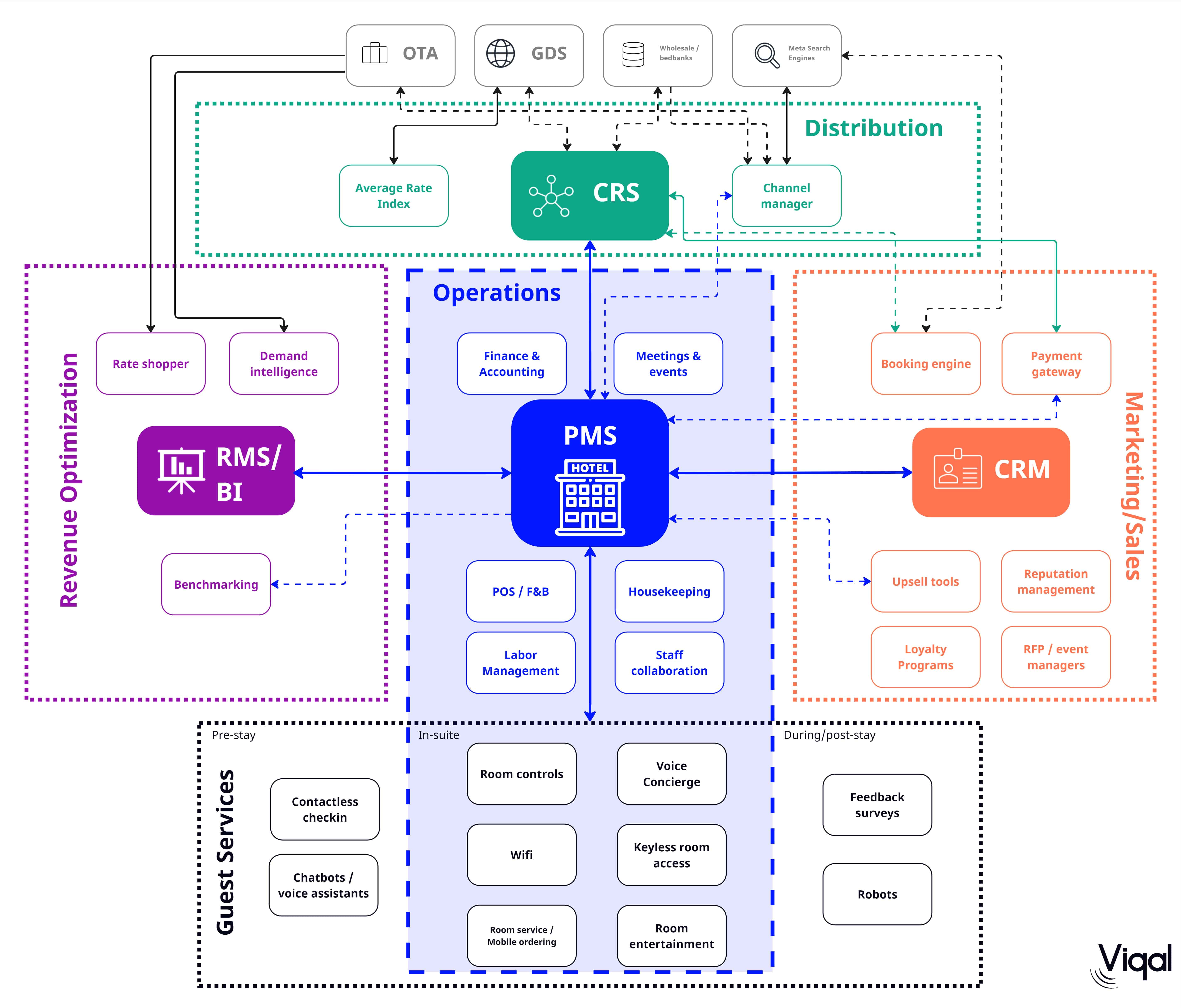
The operational case is straightforward. A good system shortens average room-ready time, gives supervisors a live view of who is doing what, and cuts the number of phone calls between floors and the front desk. Pair it with an AI Concierge on the guest side and inbound interruptions to housekeepers drop too — towels, slippers, late checkout asks — which is often where the day really gets lost. The benefit staff feel most is less standing around. Fewer printed sheets, fewer 'is 412 ready yet?' calls, fewer mystery maintenance tickets that nobody owns. That's the part GMs underestimate when they look at the price tag.
Room condition is the single biggest driver of one-star reviews. A dripping tap, a hair on the pillow, a TV remote with no batteries: none of these come up in a brand audit, but every one of them ends up in TripAdvisor. Housekeeping and maintenance software helps because issues get logged the moment a room attendant spots them, photo and all, instead of waiting for a guest to find it first. Properties that move from paper logs to a mobile workflow typically see cleanliness scores climb within a quarter. And the maintenance backlog stops being a mystery spreadsheet kept by one engineer who is about to retire.
The PMS connection is the one that matters most. When a guest checks out, the housekeeping system should know within seconds, route the room to the right attendant based on workload and floor, and flag it back to the front desk the minute it is inspected. Maintenance tickets need to flow the same way: a guest reports a broken kettle through the AI concierge, the ticket lands in the engineer's app with a photo, and the room status is updated so nobody resells it before the part arrives. Without that loop, you end up with three teams keeping their own version of the truth, and a fourth team (the GM and a duty manager) reconciling them at the morning standup.
Sustainability is where this software earns its second budget line. Linen reuse programmes only work if the data is clean: guests opted in or out, towels actually changed, laundry counts reconciled. Same goes for chemical dosing, water consumption per occupied room, and the energy spike when 30 rooms get vacuumed at once. Predictive linen forecasting (based on occupancy plus segment plus length of stay) typically cuts overstock by 15-25%, which is real money and real CO2. For ESG-focused groups, this is also where the data feeds the annual report. Without housekeeping software, that report is mostly guesswork.
A few things to weigh up. Does it integrate with your PMS out of the box, or only via custom work? Can it handle the way your housekeepers actually work, by section, by floor, by team, rather than forcing a model that doesn't fit? Is the mobile app any good in the hand, or does it look like it was designed for a desktop in 2014? How does pricing scale as you add properties? And what's the support model when something breaks at 11pm on a Friday? Reference calls with two or three current customers in your segment will tell you more than any demo.
Where is this heading? Predictive maintenance is the obvious one: IoT sensors on HVAC, leak detectors under sinks, door-lock battery monitoring, so engineers fix things before guests notice. Robotics for vacuuming and floor scrubbing is real in some flagships but still niche, and the unit economics rarely work below 200 keys. The bigger near-term shift is AI helping schedule the day: who cleans which rooms in what order, given the day's arrival pattern, the linen on hand, and which attendants are slower or faster on a given room type. Less science fiction, more useful.
Housekeeping and maintenance systems don't get the same attention as PMS or RMS, but they're where the day is won or lost. Get the dispatch loop right, give attendants a phone they actually want to use, and tie the data back to the PMS. That's the brief. Properties that do this well usually find the rest of the operation gets quieter at the same time.
← Previous: Part 4: Customer Relationship Management (CRM) Solutions | Next: Part 6: Revenue Management Systems (RMS) and Dynamic Pricing →
.avif)
They organise the day-to-day work that keeps rooms saleable: cleaning schedules, work orders, par-stock, and staff assignments. Real-time room status flows between housekeeping, maintenance and the front desk, so supervisors see who is where and rooms get inspected and released faster. Less reliance on phone calls and printed sheets, fewer mystery tickets.
Room condition is the biggest driver of one-star reviews, so anything that gets issues logged and fixed faster lifts scores. On sustainability, the same software underpins linen reuse programmes, chemical dosing, and water and energy tracking — none of which work without clean data. For ESG-focused groups, this is where the annual report numbers come from.
Predictive maintenance via IoT sensors (HVAC, leak detection, door-lock batteries) is the most concrete one. Robotics for cleaning is real in flagships but rarely pays back below 200 keys. The more useful near-term shift is AI scheduling the day: who cleans which rooms in what order, given the arrival pattern, linen on hand, and individual attendant pace.
PMS housekeeping modules (Mews, Cloudbeds, Oracle) handle basic room status flags. Dedicated systems (Optii, Hotel Effectiveness, Knowcross) add room-by-room scheduling, productivity benchmarking, mobile staff workflows, and predictive linen forecasting. Mid-size and large properties typically need both; small properties can run on PMS-only.
Real-time room status updates flow from housekeeping mobile to PMS to front desk, eliminating phone calls and printed sheets. Maintenance issues get photo-tagged and routed to the right technician in seconds. Properties with mobile workflows typically reduce average room-ready notification time by 40–60%.
Yes — linen, amenity, and minibar tracking in housekeeping software prevents stockouts and reduces waste. Predictive forecasting (based on occupancy plus segment plus season) cuts linen overstock by 15–25% and reduces emergency reorder costs. The data also feeds sustainability reports for ESG-focused groups.
.avif)


.jpeg)