A CRM for hotels is a system that collects, organizes, and manages guest data to improve communication, loyalty, and revenue. It consolidates information such as contact details, booking history, preferences, and feedback into one database. This allows hotels to personalize guest experiences and automate marketing actions.
A CRM (Customer Relationship Management)for hotels is a system that collects, organizes, and manages guest data to improve communication, loyalty, and revenue. It consolidates information such as contact details, booking history, preferences, and feedback into one database. This allows hotels to personalize guest experiences and automate marketing actions.
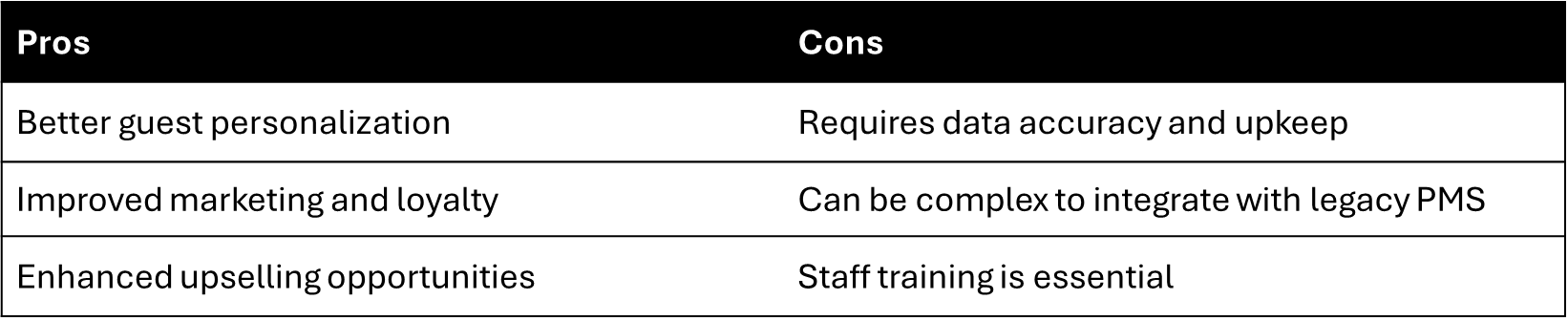
CRM systems help recognize guests, suggest upsells, and maintain engagement before, during, and after their stay. They connect with PMS, booking engines, and marketing tools to build a complete guest profile. Hotels can use this data to automate pre-arrival emails, send birthday offers, and tailor recommendations. Managers can segment guests by demographics or booking behavior and track satisfaction or repeat bookings.
Accurate guest data leads to higher satisfaction and more revenue. Personalized communication increases direct sales and strengthens guest loyalty.
.avif)
It gathers guest data from multiple systems, centralizes it, and supports personalized communication before, during, and after the stay.
It enables personalized service, better marketing, and increased revenue through guest retention and upselling.
Common integrations include PMS, channel managers, booking engines, POS, and guest messaging platforms.
By analyzing guest behavior and preferences, hotels can target offers like room upgrades or dining packages that match each guest profile.
A PMS manages operations like check-in, billing, and housekeeping. A CRM focuses on guest relationships, communication, and marketing.
Even small hotels can use CRM software to build loyalty, automate follow-ups, and increase repeat bookings without needing a large marketing team.
.avif)
