Sustainable hospitality technology refers to digital systems and devices that help hotels reduce their environmental impact. These technologies enable more efficient use of energy, water, and other resources while enhancing guest comfort. Examples include smart thermostats, energy management systems, water-saving devices, waste tracking software, and digital check-in solutions that minimize paper consumption.
Sustainable hospitality technology refers to digital systems and devices that help hotels reduce their environmental impact. These technologies enable more efficient use of energy, water, and other resources while enhancing guest comfort. Examples include smart thermostats, energy management systems, water-saving devices, waste tracking software, and digital check-in solutions that minimize paper consumption.
Hotels implement sustainable technology to monitor and optimize resource consumption. Smart sensors automatically adjust lighting, heating, and air conditioning based on occupancy. PMS integrations track utility data for sustainability reporting and certification purposes. Automated controls ensure optimal energy use without manual intervention. Many of these solutions integrate with Building Management Systems (BMS) or Internet of Things (IoT) devices to monitor performance in real time.
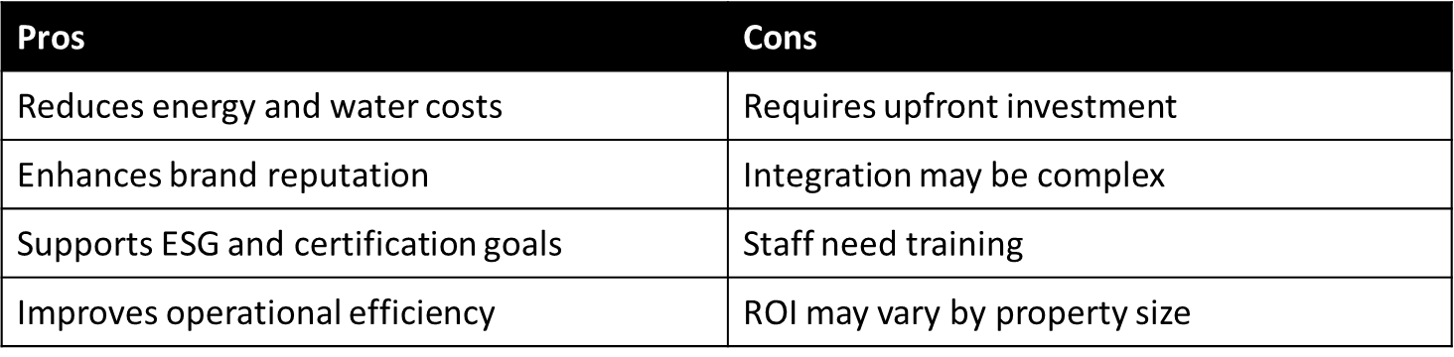
.avif)
It lowers utility bills by automating energy and water management and optimizing resource use based on occupancy and demand.
PMS, BMS, IoT platforms, and EMS (Energy Management Systems) often include modules for monitoring and reporting sustainability metrics.
Yes. Scalable solutions like smart thermostats, LED lighting, and digital key systems offer strong savings even in smaller properties.
It maintains comfort through smart controls while promoting eco-friendly operations that appeal to environmentally conscious guests.
LEED, Green Key, and EarthCheck often require or reward the use of energy-efficient and resource-saving technologies.
Begin with audits to identify high-consumption areas, then adopt smart energy, water, and waste systems with measurable impact tracking.
.avif)
